Scalping Made Simpler: How to Use Tick2Trade's Scalper for Fast Intraday Trades
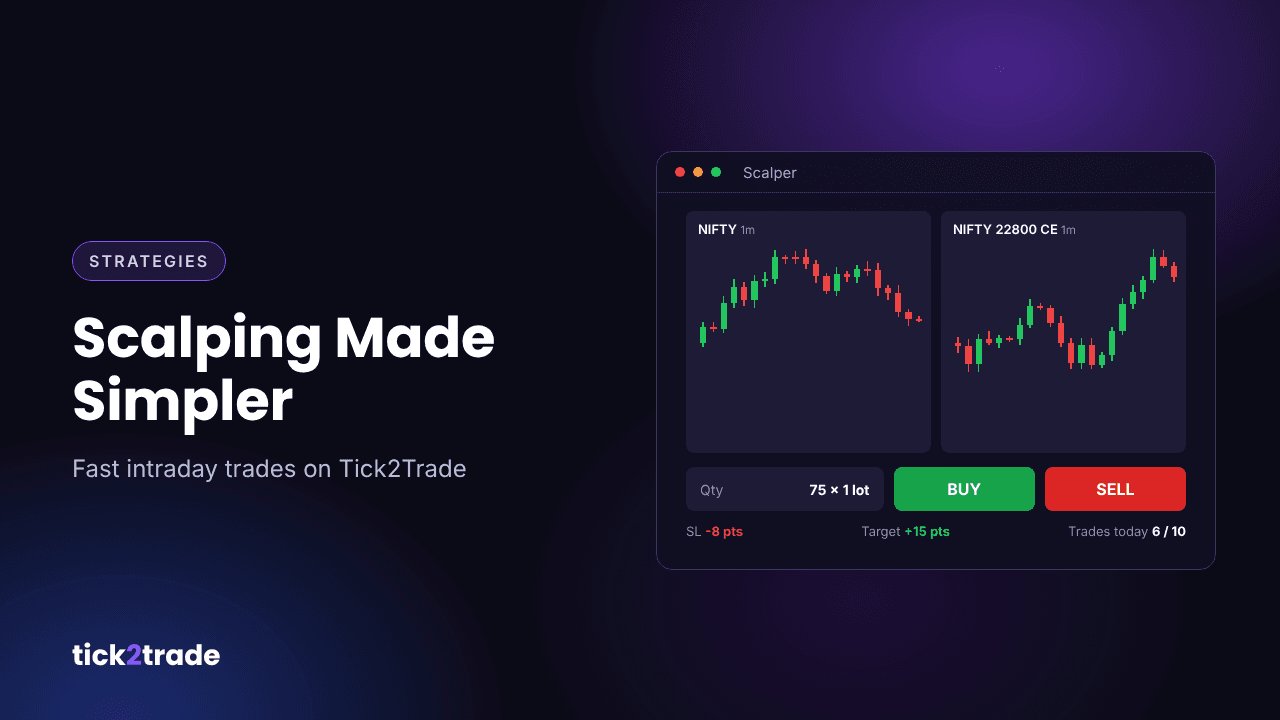
Scalping is about small, quick moves. A scalper might be in and out of a trade within a few minutes, aiming to capture a few points many times a day. In that game, every second spent switching screens, searching for a strike or typing an order is a cost. Tick2Trade's Scalper is a workspace built for speed, putting the charts you need and the controls to act on them in one focused layout.
What is scalping?
Scalping is a very short-term intraday style. Instead of riding a trend for hours, the scalper takes many small trades, usually in highly liquid instruments such as NIFTY and BANKNIFTY options and futures. Profits per trade are small, so discipline, speed and low slippage matter more than in any other style.
Why a dedicated scalping workspace helps
- Less clicking, faster decisions. The charts and trading controls you need are arranged on one screen.
- Short timeframes. Use 1-minute or even second-based charts to see micro-moves as they form.
- Context at a glance. Keep a short-term chart for entries alongside a higher timeframe for direction.
- Focus. No distractions from panels you do not need while scalping.
Three simple scalping setups
1. VWAP pullback
In a trending session, wait for price to pull back to VWAP and show a rejection candle. Enter in the direction of the trend with a stop just beyond VWAP.
2. Opening range break
Mark the high and low of the first 5 or 15 minutes. Trade the first clean break with strong volume, targeting a fixed number of points.
3. Round-number rejection
Index options often react around round numbers and high-OI strikes. Look for quick rejections at these levels for short, defined-risk trades.
Risk rules every scalper needs
- Fixed stop on every trade. Decide it before you enter.
- Daily loss limit. Stop trading after a set loss, for example 2% of capital.
- Maximum number of trades. Overtrading is the most common way scalpers lose money.
- Trade liquid instruments only. Wide bid-ask spreads can wipe out a scalper's edge.
- Count costs. Brokerage, STT and other charges add up quickly over many trades.
Practise before you scalp with real money
Scalping punishes hesitation. Use Chart Replay and the Simulator on Tick2Trade to rehearse your setups on past sessions until your execution is consistent.
Try it on Tick2Trade
Speed and focus are a scalper's biggest advantages. Open the Tick2Trade Scalper and set up your scalping workspace today.
Disclaimer: This article is for educational purposes only and is not investment advice. Trading in securities and derivatives involves substantial risk.