Trading Automation Explained: How Technology Can Simplify Market Analysis
Trading automation often brings to mind black-box robots trading thousands of times a second. For most retail traders, automation is something far more practical: getting a computer to do the watching, checking and repetitive work that eats up a trading day, so that decisions are made on time and in the same way every time. This guide explains what trading automation means in practice, which parts of market analysis are worth automating, and how to start without handing over control.
What is trading automation?
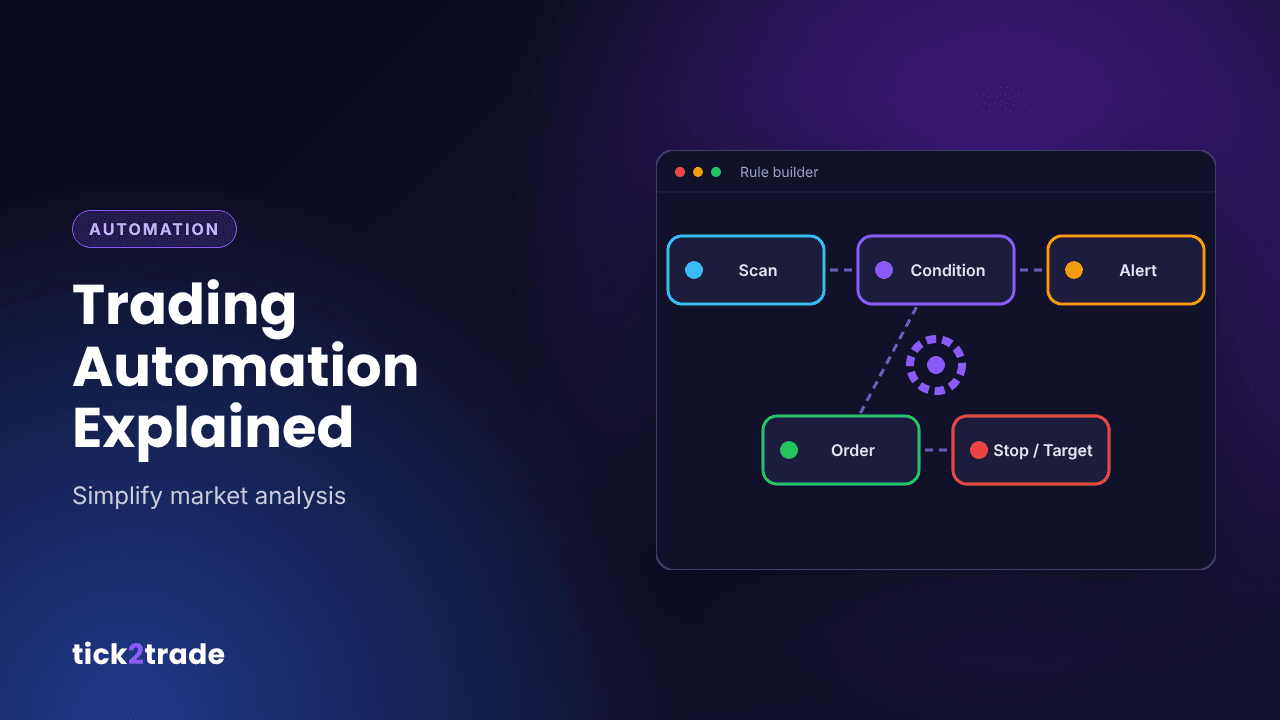
Trading automation is the use of software to carry out tasks in the trading process according to rules you define. Those tasks fall into three groups:
- Analysis: scanning the market, calculating indicators, tracking levels and flagging conditions.
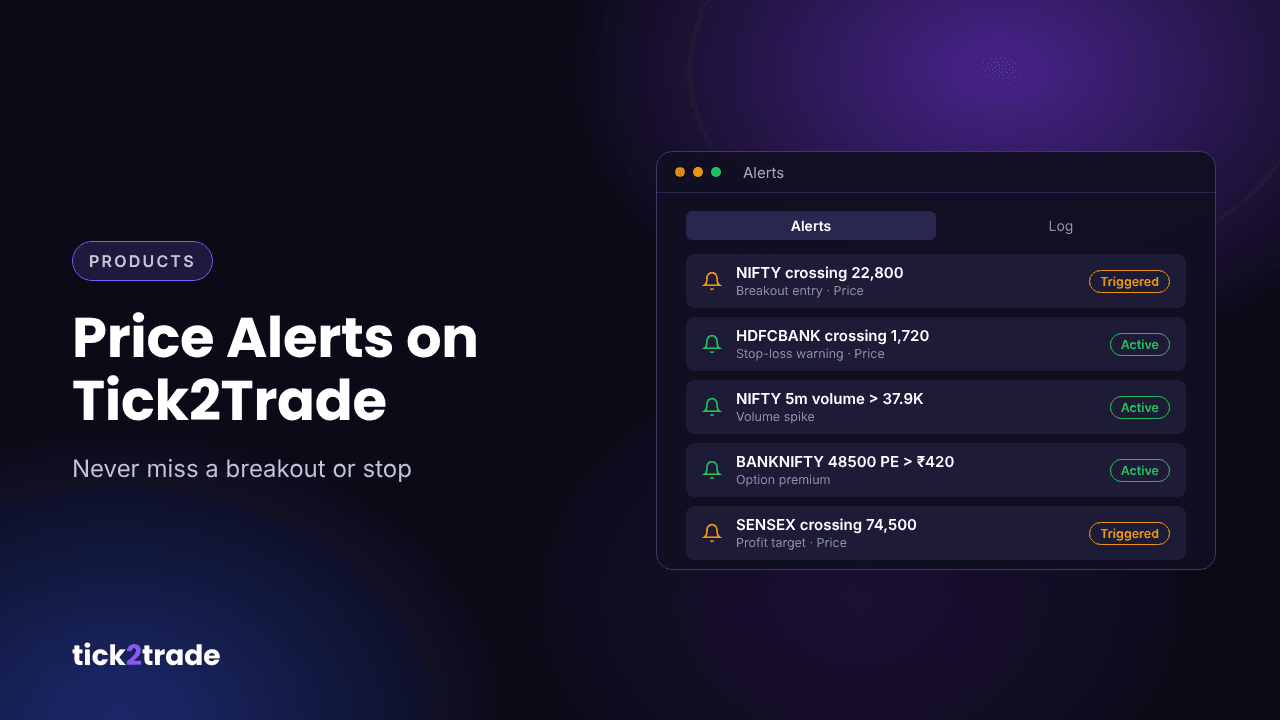
- Alerts and decisions: notifying you, or acting, when a set of conditions is met.
- Execution and risk: placing orders, attaching stop-losses and targets, and managing exits.
You can automate one, two or all three. Most traders get the most benefit from automating analysis and risk management first, while keeping entry decisions in their own hands.
How automation simplifies market analysis
Scanning instead of searching
There are thousands of listed stocks and hundreds of option strikes. A screener applies your conditions, such as a 52-week high on twice the average volume, to the whole market in seconds and returns only the candidates. Saved scans can run every day and send results to you, so the search happens without you. See our guide to stock screeners for example scans.
Calculations done for you
Options analysis involves a lot of arithmetic: put-call ratios, implied volatility, Greeks, breakevens, margin and probability of profit. Software calculates these continuously as prices move, so you see the result instead of working it out. In an option chain, labelling every strike as long buildup, short buildup, short covering or long unwinding is another example of analysis that a platform can do instantly.
Watching multiple conditions at once
A person can watch one or two things closely. A rule can watch a price level, a time window, an IV threshold and a profit target at the same time, across many positions, without getting tired or distracted.
Consistent execution of your plan
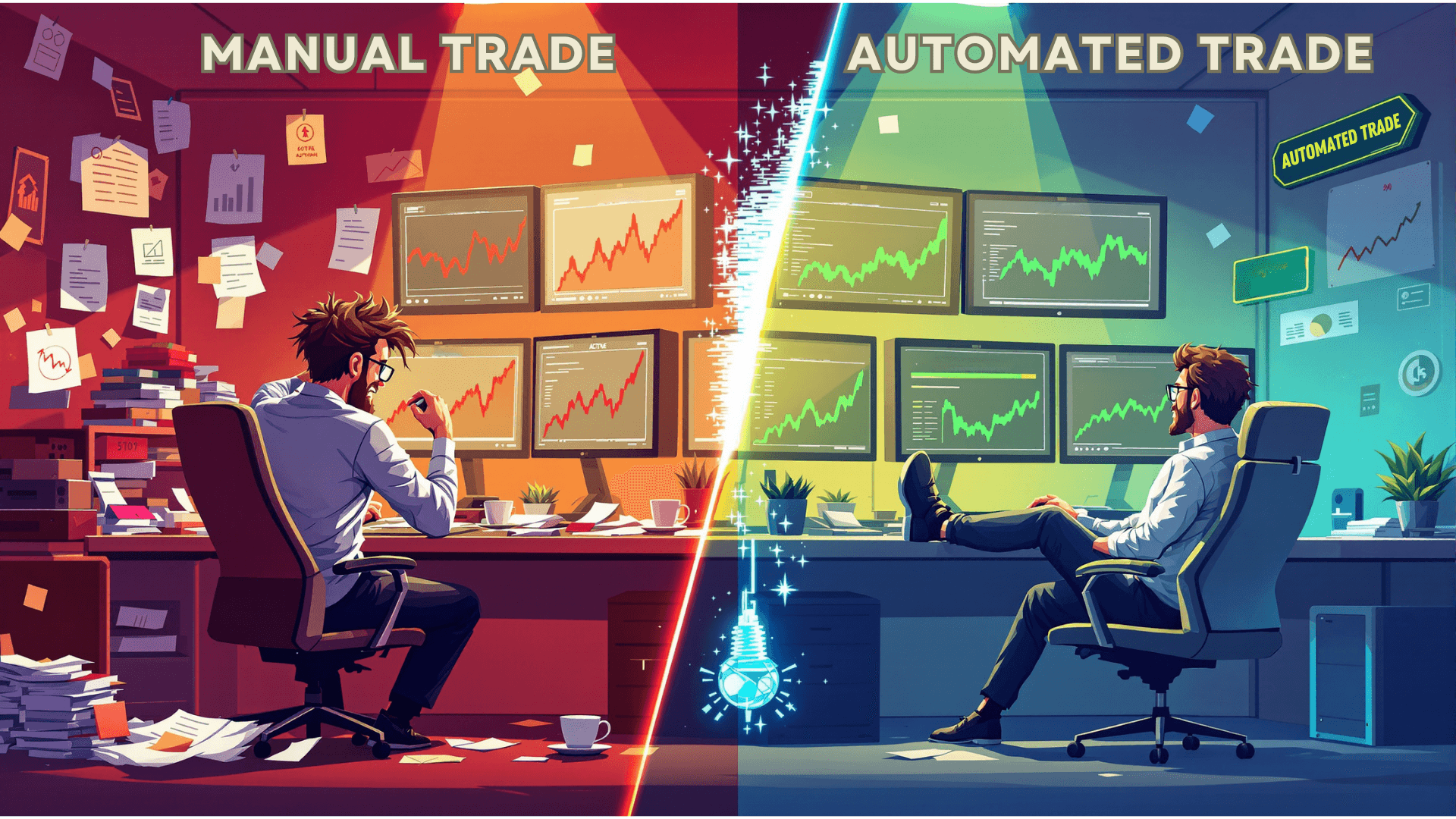
The hardest part of trading is often doing what you planned: honouring a stop, booking a target, not adding to a loser. Automated exits remove those decisions from the heat of the moment.
What automation cannot do
- It cannot make a bad strategy good. It will execute bad rules faster and more consistently.
- It cannot anticipate everything. Gap openings, illiquid strikes, news and sudden margin changes can break rules that worked in normal conditions.
- It cannot replace judgement. Deciding when market conditions have changed enough to switch a strategy off is still your job.
A simple path to getting started
- Automate your search. Build and save scans for the setups you already trade manually.
- Automate your risk. Attach a stop-loss and target to every entry using bracket orders, and use basket-level stops for multi-leg positions.
- Test your rules. Replay past sessions and check how your rules would have behaved, including on bad days.
- Add conditional rules. Once exits are reliable, define conditions for entries, such as deploying a strategy when price and IV are within a range. Start small.
- Review regularly. Compare what the rules did with what you expected, and change them deliberately rather than mid-session.
For a fuller step-by-step plan, read our beginner's roadmap from manual to automated trading.
Automation and regulation in India
SEBI's framework for retail participation in algorithmic trading became mandatory for stock brokers from 1 April 2026. Among other things, algo orders must be identifiable, broker API access requires a registered static IP, and algos offered through brokers need exchange approval. If you plan to use APIs or third-party algos, check your broker's current requirements, as the details are set by SEBI and the exchanges and can change.
How Tick2Trade approaches automation
Tick2Trade is execution-first, not algo-first. It automates the parts of trading that decide your results while you stay in control of the plan.
- Scans that come to you. Describe a scan in plain English, save it and subscribe to receive results daily.
- Analysis built in. The option chain labels buildup on every strike, and the strategy builder updates margin, max loss, Greeks, breakevens and probability of profit live.
- Conditional entry and exit rules. Set rules based on price, IV, profit and loss, and time for when a strategy should be deployed and when it should exit.
- Basket-level risk and bracket orders. Stop-losses, targets and trailing stops on single orders and whole multi-leg positions.
- Test before you trust. Use the simulator and tick-by-tick chart replay to see how your rules would have played out.
Risk disclosure: Trading in securities and derivatives involves risk, and automated rules can lose money as quickly as manual trading. SEBI studies have found that about 9 out of 10 individual F&O traders incurred net losses. This article is for education only and is not investment advice. Tick2Trade is a brand of Besseggen InfoTech LLP, SEBI Reg. No. INZ000213450.