From Manual to Automated Trading: A Beginner's Roadmap to Success
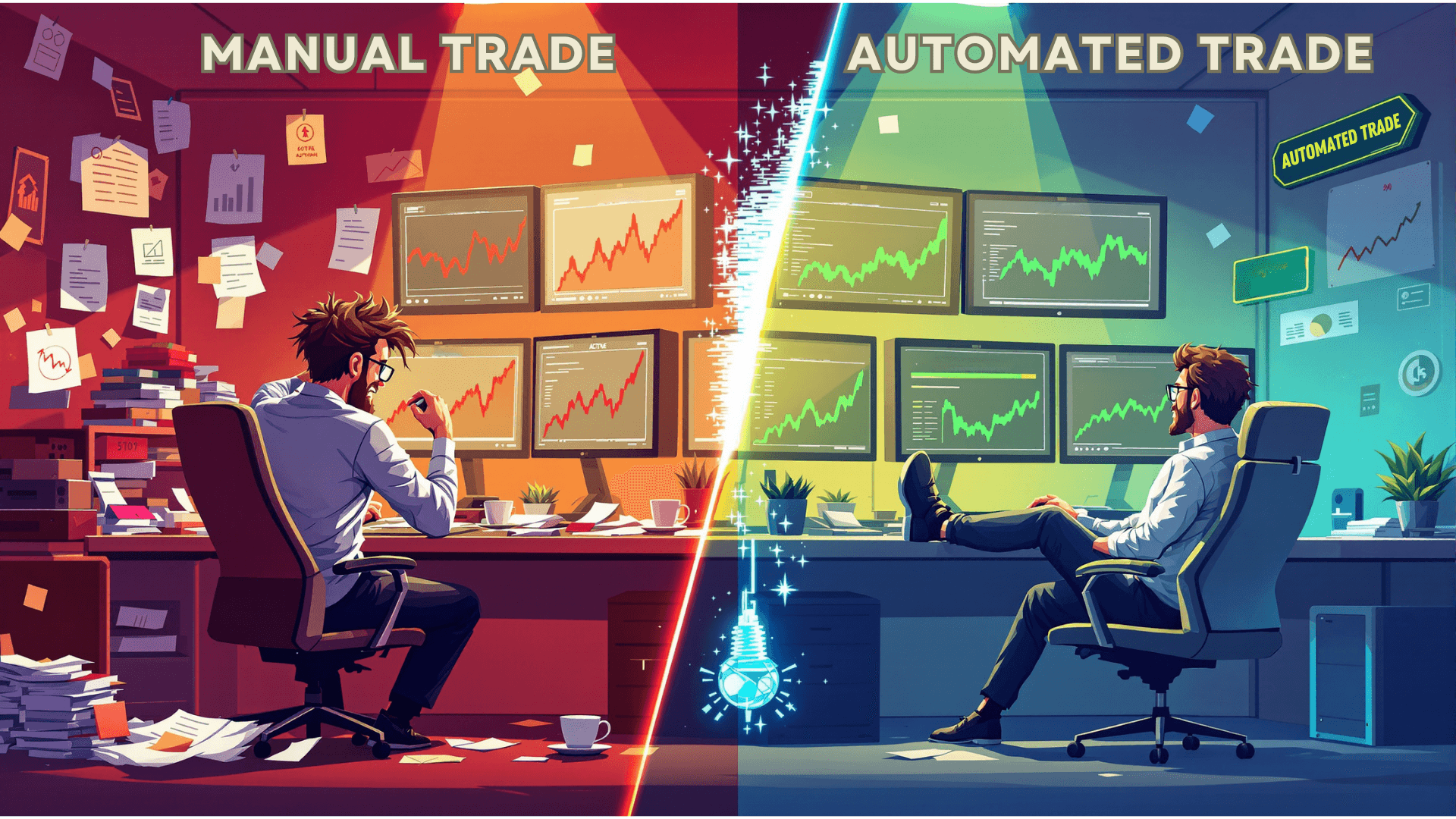
Most traders don't need a fully automated trading robot. What they need is for their plan to be carried out the same way every time: stops honoured, targets booked, hedges placed on time, even when emotions say otherwise. That is what automation is really for. This guide lays out a practical, step-by-step path from manual to rules-based trading, explains what SEBI's retail algo framework means for you in 2026, and shows where to keep a human in the loop.
Why automate at all?
- Consistency. A rule executes the same way at 9:20 am and at 3:20 pm, after a winning streak and after a loss.
- Discipline at the hardest moments. Exits are where most damage happens: stops moved "just a little", winners closed too early, losers held too long. Automating exits removes those decisions from the heat of the moment.
- Reaction time. Conditions that need several things to line up, such as a price level, a time and an IV threshold, are easier for a system to watch than a person.
- Attention. When routine actions run on their own, you can focus on analysis instead of staring at every tick.
What automation does not do is make a bad strategy good. It executes your rules faster and more consistently, including bad rules.
Automated trading in India: SEBI's retail algo framework
SEBI's framework for retail participation in algorithmic trading became mandatory for all stock brokers from 1 April 2026. In broad terms:
- Algo orders must be identifiable. Orders generated by an algorithm carry an exchange-issued algo ID, and algos offered through brokers have to be approved by the exchange.
- API access is controlled. If you place orders through a broker's API, you need to register a static IP address with your broker, and orders from unregistered IPs are rejected.
- Self-built algos have limits. Retail traders running their own algos below the exchange's order-per-second threshold can use a generic algo ID; above it, the algo must be registered.
- Algo providers are regulated. Third-party algo providers must be empanelled with exchanges.
If you are planning to use APIs or third-party algos, check your broker's current requirements before you start. The details are set by SEBI and the exchanges and can change.
A step-by-step roadmap
1. Write your rules down
Before anything can be automated, it has to be written as unambiguous rules: what triggers an entry, where the stop-loss goes, when profits are booked, how big each position is, and when you don't trade at all. If you can't write a rule clearly, a system can't follow it.
2. Test the rules on past data
Replay past sessions and check how your rules would have behaved, including on the bad days. Look at the worst losing streak and the largest loss, not just the average result. Tick2Trade's simulator lets you step through historical option chain data, and chart replay lets you replay sessions tick by tick and place virtual trades.
3. Paper trade going forward
Historical tests flatter strategies. Run the rules on live markets without real money for a few weeks to see how they behave with real spreads and real timing.
4. Automate exits first
The easiest and most valuable first step is automating risk: stop-losses, targets and trailing stops placed at entry, so every trade has a defined exit the moment it opens. Bracket orders and basket-level stops do exactly this.
5. Add conditional entries
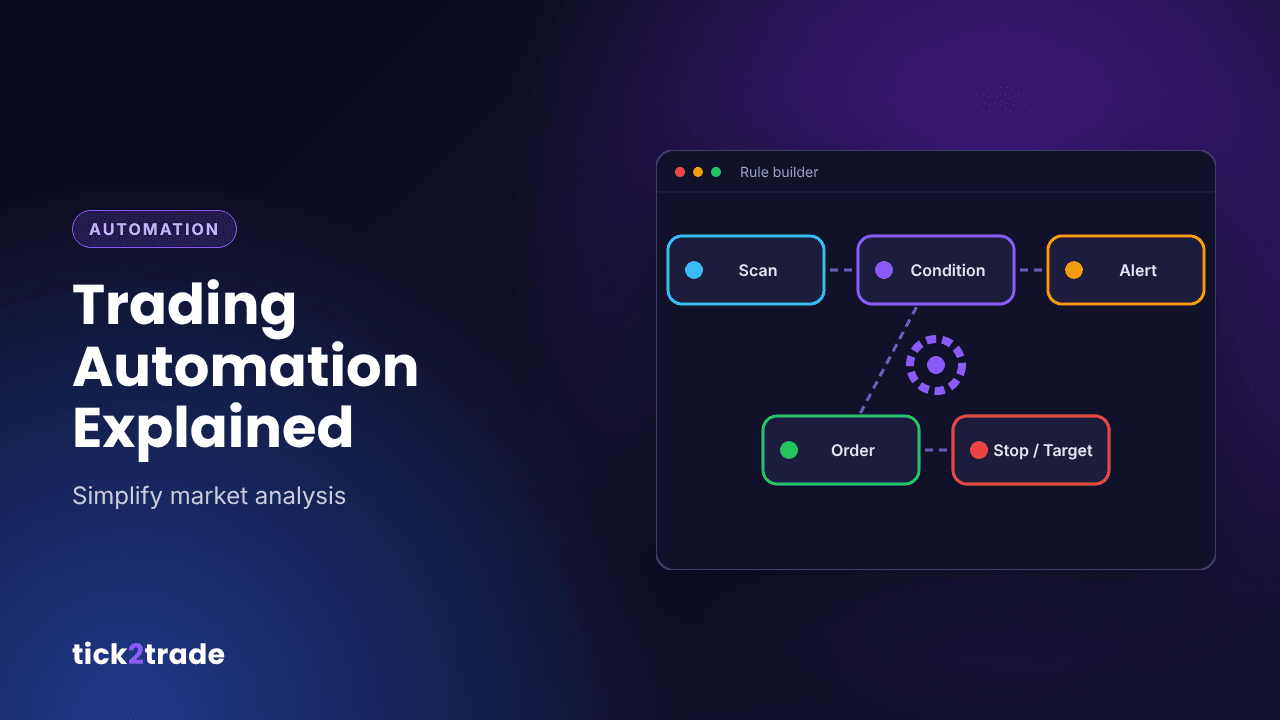
Once exits are reliable, add entry conditions, for example "deploy this iron condor if NIFTY is above a level and IV is below a threshold". Start with small size.
6. Review every week
Compare what the rules did with what you expected. Keep a way to switch automation off instantly, and change rules deliberately, not in the middle of a losing day.
Keep a human in the loop
Fully hands-off systems fail in ways their designers didn't anticipate: gaps, illiquid strikes, sudden regulatory or margin changes, news. The most robust approach for most traders is hybrid: the system handles execution of the plan, and you decide what the plan is, when to switch it on and when conditions have changed. Read more about the mindset side of this in learning to trust your trading rules.
How Tick2Trade approaches automation
Tick2Trade is execution-first, not algo-first. Instead of trying to remove you from the loop, it automates the moments that decide your P&L, such as entries, exits, hedges and rolls, while you stay in control.
- Conditional entry and exit rules. In the strategy builder, set multi-condition rules for when a strategy should be deployed and when it should exit, using price, IV, profit and loss, and time-based triggers.
- Basket-level risk. Put a stop-loss, target and trailing stop on a whole multi-leg position, with partial-exit rules.
- Bracket orders and hotkeys. Attach a stop-loss and target to every entry, and use keyboard shortcuts in the scalper to act in a fraction of a second.
- Test before you trust. Use the simulator and tick-by-tick chart replay to see how your rules would have played out.
- All within your broker. Tick2Trade is a SEBI-registered broker's own platform, so your analysis, rules and orders live in one place.
Risk disclosure: Trading in securities and derivatives involves risk, and automated rules can lose money as quickly as manual trading. SEBI studies have found that about 9 out of 10 individual F&O traders incurred net losses. This article is for education only and is not investment advice. Tick2Trade is a brand of Besseggen InfoTech LLP, SEBI Reg. No. INZ000213450.